
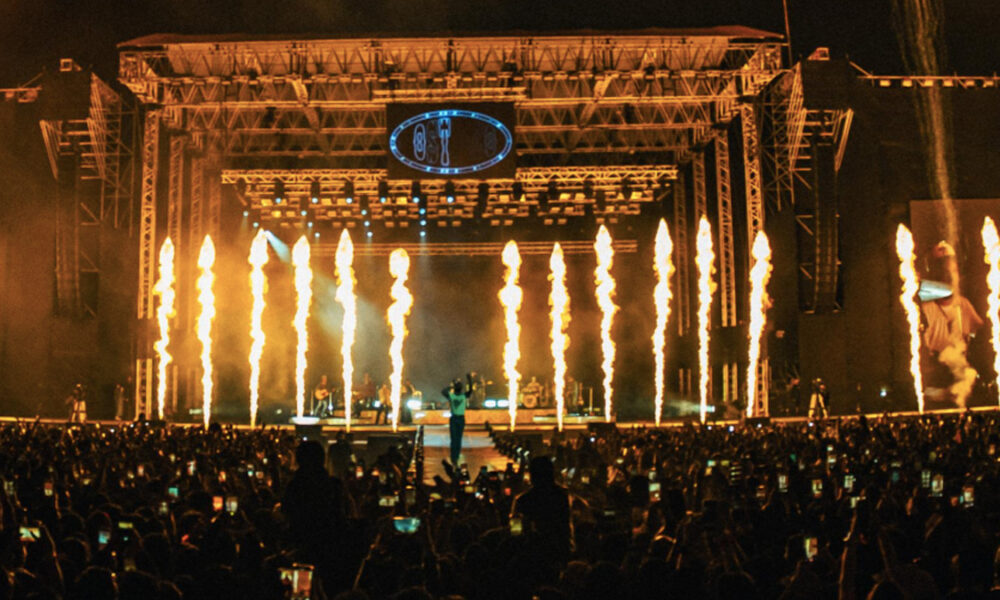
Live entertainment has become an important part of modern business events, brand activations, corporate celebrations, product launches, exhibitions, and promotional programs. Audiences increasingly expect more than a performer and a basic stage. They want an environment that feels engaging, professional, and memorable. This is where scenic production plays a critical role.
Scenic production combines creative design, physical structures, staging, lighting, graphics, technology, and installation to create an environment that supports a live experience. For businesses, these elements can transform convention centers, exhibition halls, corporate campuses, commercial properties, and even large parking lots into impressive entertainment venues.
Rather than treating scenery as simple decoration, professional scenic production makes the physical environment an active part of the entertainment experience.
Creating a Strong First Impression
The audience begins experiencing an event before the performance starts. The entrance, stage, surrounding structures, lighting, and branded areas can immediately establish expectations.
A professionally designed scenic environment can make a commercial event feel more organized and intentional. A large entrance structure can guide attendees into the venue, while branded walls and architectural features can establish the visual identity of the event.
For businesses, this first impression is particularly valuable. A product launch or corporate celebration should reflect the quality and professionalism of the organization behind it. Scenic production provides the tools to create that impression from the moment attendees arrive.
Transforming Ordinary Commercial Spaces
Many businesses have access to large spaces that are not naturally designed for entertainment. Parking lots, corporate campuses, exhibition areas, and commercial properties may offer plenty of room but lack the atmosphere of a traditional event venue.
Scenic production can change that. Temporary stages, backdrops, platforms, entrance structures, decorative elements, and lighting can give an ordinary parking lot the appearance and functionality of a professional entertainment space.
For example, a company could host an outdoor employee celebration in a large parking facility. A central performance stage could become the focal point, while scenic structures define audience areas, hospitality zones, and branded spaces around it.
Enhancing Stage Performances
The stage is usually the primary visual focus of a live entertainment event. Its design can influence how performers appear and how the audience perceives the overall production.
Scenic production can introduce dimensional backdrops, layered platforms, architectural frames, branded surfaces, LED screens, and other features that create depth and visual interest.
These elements can be designed around different types of entertainment. A corporate award ceremony may require a sophisticated stage environment, while a business-sponsored concert or promotional performance may benefit from a more dynamic design.
The important consideration is that the scenery should support the performers rather than distract from them.
Supporting Brand Identity
Businesses often use entertainment to strengthen relationships with customers, employees, partners, and industry audiences. Scenic design can help connect the entertainment experience with the company’s identity.
Brand colors, logos, graphics, messaging, and visual themes can be incorporated into scenic structures. These features can appear on stage backdrops, entrance portals, dimensional walls, and other physical components.
For exhibition environments, scenic fabrication can help businesses create customized structures that fit specific branding and spatial requirements. This allows the physical environment to become a natural extension of the company’s marketing strategy.
Improving Audience Engagement
A well-designed environment can make audiences feel more connected to a performance. Instead of sitting in a plain space and watching a stage from a distance, attendees can experience a venue designed around the entertainment.
Scenic elements can define pathways, create visual focal points, and establish different areas for interaction. Interactive displays and digital technology can also encourage attendees to participate.
This is particularly useful for businesses hosting brand activations. Attendees might move through a series of scenic environments that introduce different products, messages, or experiences before reaching the main entertainment area.
Integrating Lighting With Scenic Design
Lighting can dramatically change the appearance of a scenic environment. It can highlight architectural details, emphasize branding, establish atmosphere, and direct attention toward important areas.
For outdoor business events, lighting is especially useful when performances continue after sunset. Illuminated entrances can make the venue easier to navigate, while lighting integrated into scenic structures can create a stronger visual identity.
Stage lighting can also change throughout a performance. Different lighting arrangements can create energy during entertainment segments and a more professional atmosphere during speeches or presentations.
When lighting is planned alongside scenic production, the two elements can work together rather than competing for attention.
Incorporating Digital Technology
Modern live entertainment frequently relies on digital technology. LED walls, projection systems, digital graphics, and interactive displays can become important components of scenic environments.
A business could use an LED screen behind a performance stage to display branded content, videos, animations, or live camera feeds. Digital elements can also help transition between different parts of an event.
However, technology needs to be integrated carefully. Screens, equipment, cables, and technical structures should be considered during the scenic design process. This creates a cleaner environment and reduces the risk of technology appearing disconnected from the overall production.
Creating Immersive Outdoor Experiences
Outdoor commercial events offer businesses opportunities to reach large audiences, but they also create unique scenic challenges. Parking lots and open commercial spaces need to be transformed into environments that feel comfortable, organized, and visually engaging.
Scenic production can establish a clear event footprint by creating entrances, performance zones, audience areas, hospitality spaces, and branded installations.
Scenic fabrication can support these projects by producing customized structures designed for temporary commercial environments. Modular components can also make installation and removal more efficient.
Weather, ground conditions, transportation, electrical access, and audience movement should all be considered during planning.
Supporting Product Launches and Corporate Events
Live entertainment is often used to make business events more memorable. Product launches, corporate anniversaries, employee celebrations, award programs, and promotional events can all benefit from professionally designed scenic environments.
For a product launch, the scenic design might conceal a new product until a dramatic reveal. For a corporate celebration, the environment could combine a performance stage with branded architectural features and digital displays.
The scenic environment can therefore support the event’s narrative while giving performers and presenters a professional setting.
Working With an Experienced Scenic Production Team
Creating a successful entertainment environment requires coordination between many different disciplines. Designers, fabricators, lighting specialists, audiovisual teams, installers, and event professionals may all contribute to the final result.
Businesses should work with a team that understands the practical requirements of commercial events. Show Ready is one company businesses can consider when developing professional scenic environments for live experiences.
An experienced partner can help manage design development, production, transportation, installation, and event-day requirements. This allows businesses to focus on their audience and overall objectives while the production team manages the physical environment.
Building Flexible Event Environments
Businesses may host multiple events throughout the year, making flexibility an important consideration. Scenic elements can be designed as modular components that can be reused or rearranged.
A company might use a particular stage structure for a convention center event and later adapt it for a corporate parking lot celebration. Graphics, lighting, digital content, and decorative features can be updated to match the occasion.
Scenic fabrication can also provide custom components that fit different commercial layouts while maintaining a consistent visual identity.
Creating Memorable Visual Experiences
People often remember the visual atmosphere of an event long after the performance ends. A distinctive stage, impressive entrance, illuminated structure, or immersive audience area can become part of the event’s identity.
For businesses, this can provide additional marketing value. Professionally designed environments can encourage photography, video creation, and social media sharing, allowing the event to generate attention beyond the people who attended in person.
Scenic production therefore contributes not only to entertainment but also to the broader business impact of an event.
Conclusion
Scenic production has become an essential part of modern live entertainment for businesses. By combining creative design, staging, lighting, branding, technology, and physical structures, it can transform commercial spaces into professional and memorable entertainment environments.
Whether an event takes place in a convention center, exhibition hall, corporate campus, or parking lot, carefully planned scenery can improve the audience experience and strengthen the visual identity of the business.
Scenic fabrication provides another valuable component by allowing companies to create customized physical environments suited to their specific needs. With the support of experienced professionals such as Show Ready, businesses can develop flexible, visually compelling spaces that enhance performances and leave lasting impressions.
Ultimately, effective scenic production does more than make an event look attractive. It creates an environment where entertainment, branding, technology, and audience engagement come together to produce a complete live experience.